
Sweetening the deal: How innovation is reshaping sugar in Southern Africa
Southern Africa’s sugar industry entered a pivotal period as rising input costs, climate pressures and shifting global markets forced producers, processors and exporters to rethink how the sector grows and competes.
But alongside these challenges, the industry also identified significant opportunities to build a more diversified, climate-resilient and value-added sugar economy capable of supporting farmers, creating jobs and unlocking regional trade.
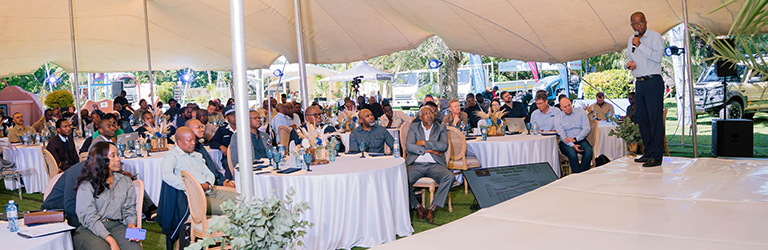
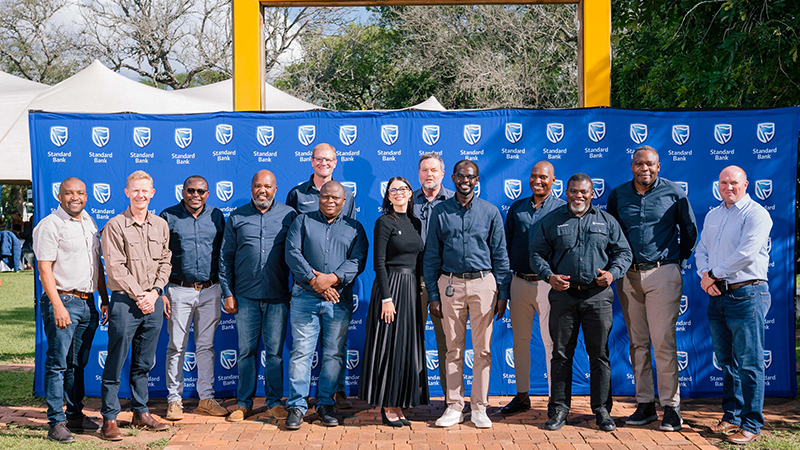
These themes came into sharp focus at the Standard Bank Regional Sugar Summit held at Simunye Country Club in Eswatini, where policymakers, financiers, producers and technical experts from across the SADC region gathered to discuss the future of one of Southern Africa’s most important agricultural sectors.
For SMEs, agribusinesses and entrepreneurs operating across agriculture, logistics, energy and manufacturing, the discussions reinforced an important shift: the future of sugar was no longer only about sugar production. Increasingly, it centred on stronger collaboration between industry stakeholders working towards shared sector objectives, including value chain development, renewable energy, technology adoption and regional market access.
Why the sugar sector still matters
The summit highlighted the continued importance of the sugar industry as a major economic driver across Southern Africa, supporting hundreds of thousands of jobs across farming, milling, transport and manufacturing. In Eswatini, sugar remained one of the country’s leading export earners and a key contributor to agricultural GDP.
Discussions throughout the day reflected growing recognition that the industry needed to evolve beyond traditional production models and embrace innovation, sustainability and diversification.
Among the opportunities explored were:
- Bio-energy and cogeneration
- Bio-fertiliser and broader circular economy opportunities
- Climate-smart agriculture
- Precision farming and water management
- Value-added products
- Expanded regional trade under the African Continental Free Trade Area (AfCFTA)
The summit’s three strategic focus areas: value chain integration, climate resilience through innovation and market diversification, underscored the industry’s drive to future-proof the sector.
Financing growth across the value chain
One of the strongest themes to emerge from the summit was the need for more accessible and innovative financing models.
Industry stakeholders highlighted funding constraints as a major barrier to expansion, mechanisation and climate adaptation across the sugar value chain.
Discussions explored how financing models could move beyond traditional asset-based lending towards approaches focused on production potential and future income generation.
This was particularly relevant for:
- Smallholder growers
- Outgrower schemes
- Agro-processing
- Renewable energy entrepreneurs
- Logistics and infrastructure businesses linked to agriculture
Standard Bank Eswatini Chief Executive Mvuselelo Fakudze described the sugar industry as “a powerful engine for inclusive development.” He noted that stronger collaboration across the sector could help improve livelihoods, strengthen rural economies and support long-term food and energy security.


Renewable energy emerged as a major opportunity
Another major area of focus was the growing relationship between sugar production and renewable energy.
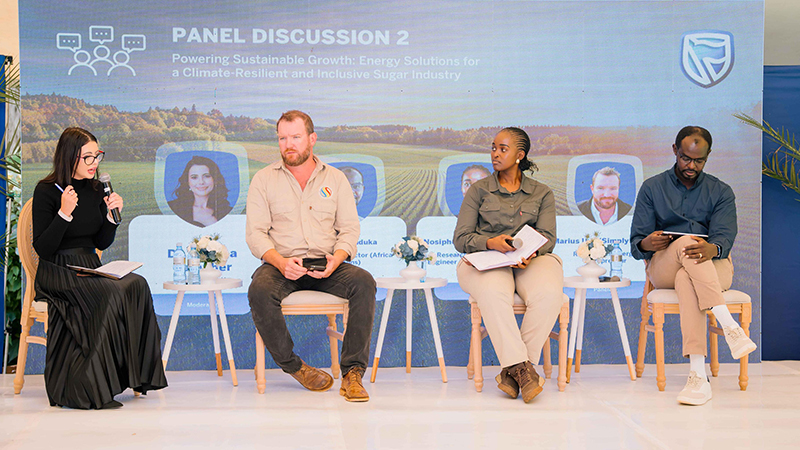
Panel discussions explored how biomass, bioethanol and cogeneration projects could improve profitability while reducing carbon emissions and strengthening energy resilience. The discussions also highlighted growing circular economy opportunities, including the conversion of sugar by-products into energy for businesses operating in clean energy, engineering, agri-tech and sustainability sectors. Delegates also emphasised that scaling renewable energy successfully would require enabling regulatory frameworks, stronger collaboration between industry, financiers, policymakers and implementation partners, and a focus on developing projects that are commercially viable, bankable and operationally executable on the ground.
In addition, technical sessions examined the role of precision agriculture, AI-driven farming, advanced irrigation systems and climate-smart production methods in improving long-term resilience and productivity through innovation.
A more connected regional future
At its core, the summit reinforced a broader reality facing African agriculture: industries could no longer operate in isolation.
Regional collaboration, stronger trade corridors and deeper value chain integration emerged as critical priorities as businesses navigated climate risk, evolving consumer demand and global market uncertainty.
For SMEs and entrepreneurs, the summit highlighted growing opportunities not only to expand locally, but also to participate in a more connected regional agricultural economy.
As the industry continued to evolve, businesses that embraced innovation, sustainability and collaboration appeared best positioned to compete and keep growing.