Your holiday budget guide
Planning a getaway is exciting, and having a clear budget ensures you return home feeling relaxed and recharged without lurking credit card bills.
South Africa and its surrounding areas have an abundance of holiday options for different budgets and adventure appetites.
The key to a stress-free holiday is knowing exactly what your trip will cost before you leave, and that means looking at more than just the price of your accommodation. Here’s a guide on how to view your holiday budget as a roadmap for your trip, not as a list of restrictions.
How do I create a holiday budget?
Creating a holiday budget doesn't have to be complicated. It’s about making sure you can afford the things you care about without stressing over money while you're away. To make it easy, you can break the whole process down into 4 simple steps:
- Set your total spending cap
Decide how much you can realistically afford to spend without negatively impacting your short- and long-term financial goals. - Choose your destination based on that cap
Check whether the type of trip you want to go on falls within your spending limit. - List your expenses for the trip
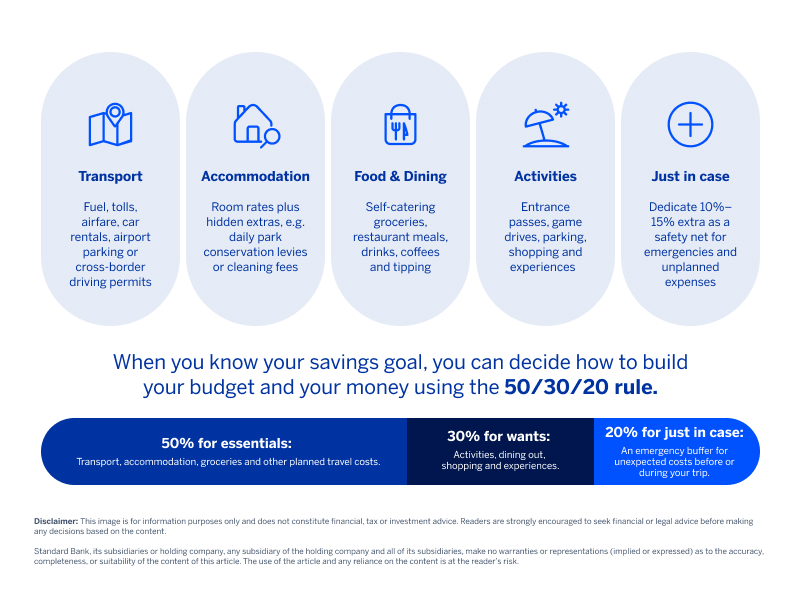
Divide your costs into transport, accommodation, food, activities and a buffer. - Track planned vs actual costs
Estimate costs before you leave, then log your spending during the trip to stay on track.
What expenses should I include in a travel budget?
To build an accurate budget, you need to look beyond where you’ll sleep and how to get there. Your travel budget should include the following:
How to budget for different holiday types
Depending on whether you're heading to the beach, escaping to the bush or travelling across the border, where your money goes will look a little different. Here’s how to approach budgeting for 3 popular getaway styles.
The beach holiday
Sun, sand and swimming can do wonders to boost your mood. Accommodation options range from luxurious beachfront resorts to budget-friendly self-catering units, so consider what you can afford and what you want out of the experience.
Beach getaways offer flexible spending options, making them great for families or groups.
- Getting there: If you’re within 5 hours of the coast, it makes sense to drive, so make sure you budget for fluctuating fuel prices and national toll gates. If you’re further away, consider flying.
- Stay: Self-catering chalets or beach apartments are more cost-effective for families than hotels because you avoid daily service fees and expensive room service. You can also save significantly by cooking breakfasts and dinners at your accommodation, leaving your eating-out budget for lunch or evening drinks.
- How to stretch the budget at the coast: Buy your beach essentials (sunscreen, toys, water bottles, umbrellas) at local prices before leaving home. Put in block/box – any way you can make this visually stand out:

If you’re a Standard Bank customer, use the Travel add-on in the app to see if you qualify for travel discounts.
Learn more about Standard Bank Travel
The bush break
If you’re looking to connect with nature, there are plenty of options for wild adventures in top-tier nature reserves and game parks. Spotting wildlife is priceless, but remote trips can introduce unexpected costs if you aren’t prepared.
- Getting there: Many of the best bush breaks are situated remotely, so include the cost of driving there and road tolls.
- Stay: There are plenty of choices that cater for every wallet, from luxury lodges to self-catering accommodation and tented camps. Remember to take mosquito spray and a mosquito net.
- Budgeting for extras: Ensure you add these to your budget:
Conservation fees Medical costs Game drives Most reserves charge daily entry fees per person that aren't included in your accommodation price—these add up quickly for families. If visiting a malaria risk zone, remember to budget for doctor consultations and preventative medication for everyone.
Decide early whether you’ll self-drive or pay for guided game drives as these per-seat costs can significantly impact your total.
Opting for mid-week stays or outside peak season often unlocks lower rates and special package deals.
The cross-border getaway
Visiting a neighbouring country offers a rich cultural experience without long-haul flight costs. For example, Gaborone is under 5 hours from Johannesburg, and Maputo is about 2.5 hours from Nelspruit.
Getting there: Whether you drive or fly, factor in fuel, tolls, border fees, permits and ferries, or airfare and tour shuttles. Keep in mind that currency fluctuations can impact your budget. Card payments are convenient but come with conversion fees, while carrying only cash means paying for exchange services.
If you’re driving your own vehicle across the border, remember to get your cross-border letter on the Banking App.
get your cross-border letter on the Banking App
Some regional safari lodges operate on tiered pricing structures (local SADC rates vs international rates). Verify which rate applies to you prior to booking to save on accommodation and activities. Always check proximity to emergency medical facilities.
Key takeaways for budgeting for any vacation
- Set a spending cap and stick to it before making any bookings
- Add a little extra in your budget for hidden or unexpected costs
- Leverage your credit card travel benefits, rewards programme or booking platforms to help lower travel costs
Terms and conditions apply.
Disclaimer: This article is for information purposes only and does not constitute financial, tax or investment advice. Readers are strongly encouraged to seek financial or legal advice before making any decisions based on the content.
Standard Bank, its subsidiaries or holding company, any subsidiary of the holding company and all of its subsidiaries make no warranties or representations (implied or expressed) as to the accuracy, completeness or suitability of the content of this article. The use of the article and any reliance on the content are at the reader’s risk.
Related articles and media