
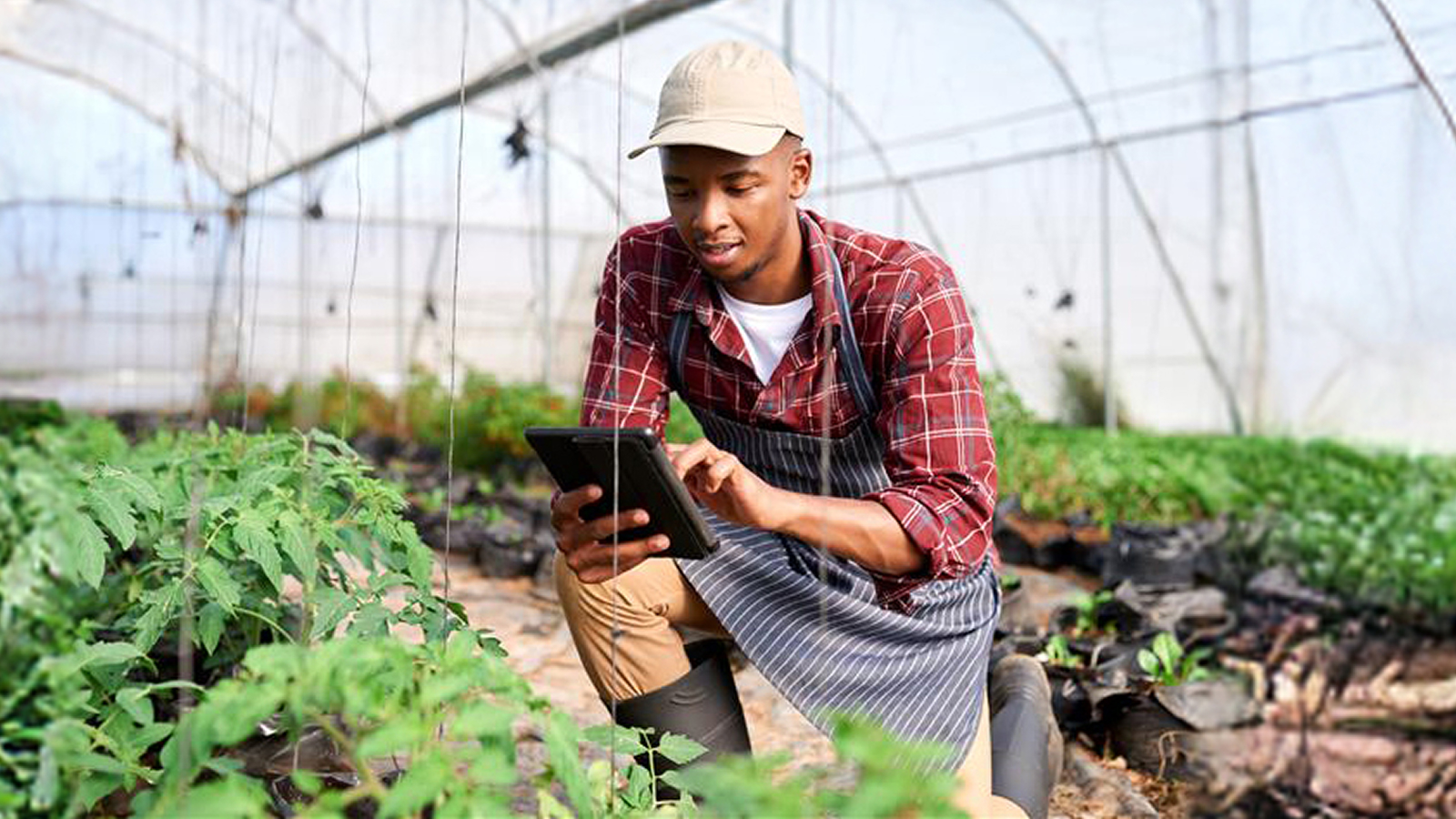
Farming smarter: Building Africa's resilient future
Your business’s operational pulse defines your success.
In Africa, agriculture is that pulse. It's not merely an industry; it's the bedrock of economic stability, accounting for a remarkable 25% of the continent's gross domestic product (GDP), 65% of its employment and 75% of its domestic trade. This vital sector provides livelihoods to millions and has a direct impact on our daily lives, feeding communities and fuelling economies across the continent.
Climate's challenge, Africa's opportunity
Despite its importance, Africa's agricultural sector faces significant challenges, primarily from climate change. With 95% of the continent's cropland relying solely on rain, it stands acutely vulnerable to the erratic dance of heat, drought, pests and floods, directly threatening food security. However, within this urgency lies a powerful opportunity. Africa boasts an impressive 65% of the world's uncultivated arable land and a vast, dynamic labour force. This unique combination presents immense potential for growth, but unlocking it requires a strategic shift: embracing climate-smart practices and advanced technologies for African agriculture.
To truly build resilience and seize this opportunity, the adoption of climate-smart practices and advanced technologies is not merely beneficial; it's essential. Regenerative agriculture, for instance, plays a vital role in maintaining soil health, improving water retention and sequestering carbon, foundational elements for sustainable farming. This approach, when combined with powerful tools, such as precision agriculture, the use of drought-resistant seeds, the efficiency of solar-powered irrigation and the protection offered by controlled cultivation methods, will enable Africa to leapfrog towards a truly sustainable agricultural future.
The financial engine in agribusiness
At a practical level, the journey towards climate-smart farming often presents a financial dilemma. Initial investments, while promising long-term gains, can temporarily impact yields or profitability, creating a significant barrier to adoption. This financial strain, coupled with the inherently capital-intensive nature of modern agriculture, underscores the critical need for financial partners who possess a deep understanding of the sector’s cyclical nature and unique risks.
Effective financial support isn't just about capital; it's about informed expertise. Financial institutions need the following:
- On-the-ground knowledge: Experts with an in-depth understanding of the agricultural sector who spend time on farms, truly grasping customer challenges and aspirations
- Nuanced market insight: Business and credit teams must understand external factors such as volatile weather, fluctuating market prices and shifting tariffs
- Sector-specific financial acumen: Credit specialists need to know the agricultural sector’s dynamic revenue and cost cycles
Find out how we help agricultural businesses
This combined insight allows financial partners to precisely tailor solutions. For instance, understanding seasonal commodity price variations enables structuring financing that optimises stock management during advantageous buying cycles, enhancing both operational efficiency and financial viability for clients.
To ensure long-term sustainability, the focus must be on supporting the transition from climate risk adaptation to mitigation across both commercial and small-scale farming. While their operational sizes and needs differ, both segments face a common set of significant challenges, with changing weather patterns directly affecting yields and financial viability.
A phased path to competitiveness
Commercial farmers operate on a large scale, requiring substantial, long-term capital for critical infrastructure investments such as extensive irrigation systems and sophisticated processing plants. They also navigate stringent international regulations, including phytosanitary requirements for premium export destinations such as the European Union, while managing complex and vast supply chains.
For financial institutions supporting this commercial journey, they must prioritise affordability. Since large-scale climate-smart transitions are rarely possible all at once, agribusinesses should adopt a phased approach that balances long-term sustainability with immediate affordability. This could involve the following:
- Upgrading equipment, such as precision planters or variable-rate fertiliser spreaders
- Optimising systems, such as installing variable speed drives for irrigation pumps
To incentivise the adoption of climate-smart practices, financial institutions can provide cheaper, more flexible debt with longer repayment terms. While access to concessional funding may be limited, many African countries have implemented central bank programmes that support the development of sustainable agricultural sectors. These initiatives often focus on promoting value addition, improving climate resilience, and providing more affordable local currency funding—creating a viable pathway for advancing climate-smart agriculture.
The bank continues to collaborate with development finance institutions (DFIs) on a risk-sharing basis to enhance its ability to support clients navigating the transition toward sustainable, climate-resilient operations.
Building climate-smart ecosystems for small-scale farmers
For Africa’s small-scale farmers, our focus is on partnerships that strengthen entire value chains rather than providing direct individual support. Given the fragmented nature of this segment, a value chain approach proves far more impactful. Our experience highlights best practices that involve the following:
- Supporting seed companies: We support companies developing drought-resistant varieties and seeds for varied growing seasons. This ensures viable, climate-adapted options are widely accessible to all farmers, including small-scale producers, allowing them to choose inputs best suited to their needs.
- Extending support to out-growers: We work with anchor companies within the value chain that engage directly with small-scale farmers. These anchors provide farmers with quality inputs, advisory services, and technical support throughout the season to improve productivity and yields. This approach not only benefits the farmers but also stabilises the supply chain. Irrigation systems, for example, are typically provided by our clients that support small-scale farmers, ensuring access to essential infrastructure indirectly rather than through direct financing.
- Supporting poultry genetic companies: We assist in establishing foundational infrastructure (e.g. grandparent farms and hatcheries) across Africa. This ensures a reliable supply of high-quality day-old chicks that efficiently convert feed into protein, boosting the entire poultry agricultural value chain’s viability and resilience. This strategy also helps reduce risks from disease outbreaks (e.g. avian flu), ensuring consistent chick availability and enabling profitable operations for both commercial and small-scale farmers while maintaining an affordable protein source.
Partnering for a sustainable agricultural future
Africa’s agricultural future holds immense potential. Our comprehensive offering includes tailored solutions, investing in scalable value chain solutions, fostering strategic partnerships and guiding climate-smart growth. Our long-term commitment to agribusinesses ensures every step is built on financial viability and sustainability, benefiting Africa's agricultural future for generations to come.