
Powering Growth from the Ground Up: Insights from the launch of the Township Informal Economy Report 2025
The launch of the Standard Bank Township Informal Economy Report 2025 brought data, dialogue and inspiration to life, starting with site visits to three township businesses redefining resilience: Ukuhamba, Thesis Lifestyle and All in One Emergency.
The report reveals a R900 billion sector that’s still 80 % informal and 57 % self-funded. The lively panel discussion that followed explored how tailored funding, digital inclusion and skills support can unlock its full potential.
We began the day with a journey through South Africa’s township enterprise landscape visiting three remarkable businesses reshaping their communities:
- Ukuhamba: pioneering mobility solutions through locally manufactured wheelchairs and assistive devices.
- Thesis Lifestyle: a fashion and lifestyle brand redefining creativity and township identity.
- All in One Emergency: providing critical ambulance and medical and panelbeating services within the township.
These visits reminded us that the informal economy isn’t informal in ambition. It’s structured by ingenuity, survival and purpose.
The Data Behind the Drive
The report, compiled by market research consultancy Foshizi, was based on interviews with over 250 businesses across 5 of South Africa’s provinces who have created over 7 500 jobs, revealed a R900 billion economic contribution. Yet, 80 % of township businesses remain unregistered, and 57 % rely on personal savings to stay afloat.
Digital adoption and formal banking access remain low, limiting growth potential and financial resilience. But behind those numbers are human stories — entrepreneurs who persevere despite systemic barriers.
Panel Insights: From Potential to Prosperity
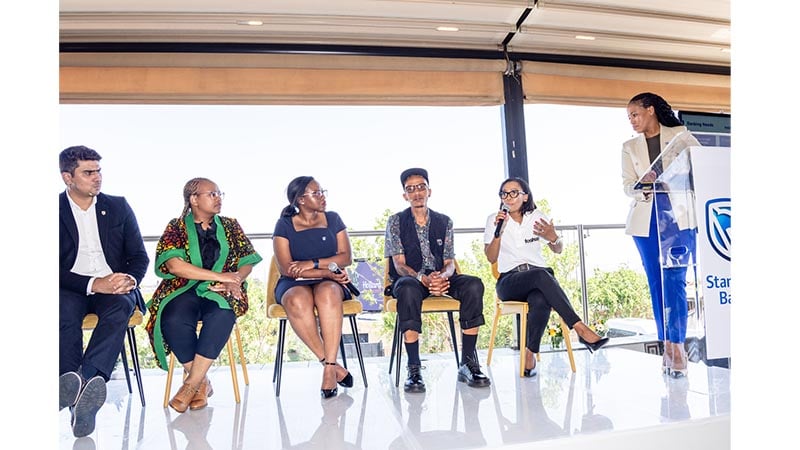
At 1947 on Soweto’s internationally acclaimed Vilakazi Street, our dynamic panel discussion featured: Naledzani Mosomane, Head: Enterprise and Supplier Development, Standard Bank; Muzzafar Nagyadari, Standard Bank Merchant Solutions; Wandile Zondo, Co-Founder & CEO of Thesis Lifestyle; and Phumla Hlati, Portfolio Head of Inclusive Growth at the UN Development Programme South Africa.
Together, they discussed funding innovation, formalisation, and gender equity.
“It was a painful truth to see how marginalised women-owned businesses are in the township economy. Many women operate out of necessity, not choice, juggling childcare, shopkeeping and survival. Women are better payers when it comes to financial facilities — that should give every funder confidence. We must intentionally design solutions that meet them where they are,” said Naledzani Mosomane.
She also highlighted the US $45 billion funding gap for women entrepreneurs across Sub-Saharan Africa and the importance of programmes like Basali, which combine skills development with access to capital.
From Insights to Action
The township economy is not informal in ambition, it’s rich with enterprise, ingenuity, and potential.” The Township Informal Economy Report does more than capture data, it gives visibility to a R900 billion network of entrepreneurs who power livelihoods and local resilience.
It reminds us that growth begins where inclusion takes root, when access to finance is matched by access to knowledge, when partnerships replace distance and when the bank is not outside the community but part of it.
As Naledzani Mosomane reflects, “Funding without development doesn’t deliver sustainable change.”
That’s why Standard Bank continues to back township entrepreneurs with programmes that connect capital, capacity and confidenceensuring that when businesses grow, communities grow.
Read the full Township Informal Economy Report 2025 here.