
How to know if it's really Standard Bank: Spot the warning signs of fraud
Fraudsters know that people are more likely to trust a familiar brand. That's why they often pretend to be Standard Bank, creating convincing SMSs, emails, websites, WhatsApp messages, and even phone calls that look and sound genuine.
Their goal is simple: to create a sense of urgency and get you to act before you stop to think.
The golden rule: what Standard Bank will never ask you to do
Before we dive into the different ways fraudsters may contact you, remember this:
We will never ask you to:
- Share your PIN or banking password
- Share a One-Time Password (OTP)
- Share your card CVV number
- Click a link to "verify" or "unlock" your account
- Move money to a "safe account"
- Download software or an app so we can "secure" your device
- Approve a transaction in your Banking App that you didn’t initiate
If anyone asks you to do any of these things while claiming to be from Standard Bank, it’s a scam.
Learn more about scams
1. What to do when you get an SMS
What it looks like
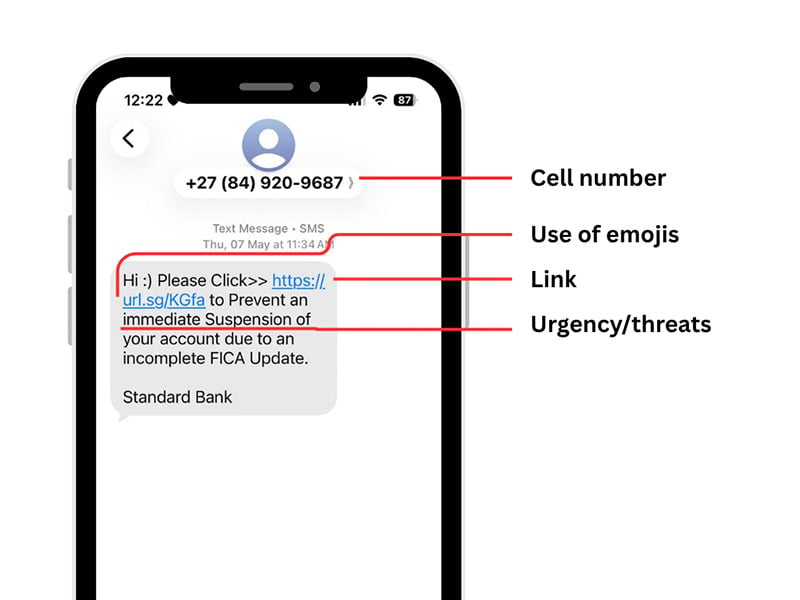
Scam SMSs are designed to create concern or urgency. They may claim that:
- Your account has been suspended
- A suspicious transaction has been detected
- Your banking profile needs verification
- Your card has been blocked
The message typically includes a link and asks you to take immediate action.
Did you know? Fraudsters can spoof sender names. This means a scam SMS may appear in the same message thread as genuine Standard Bank communications.
Here’s how to stay safe
- Don't click links in SMSs
- Open the Standard Bank App directly
- Check your account status on the Banking App
- If you're unsure, call us from your Banking App
2. What to do when you get a call
What they often sound like
Fraudsters often impersonate bank employees and sound professional, confident, and knowledgeable. They may claim that:
- Fraud has been detected on your account
- Someone is trying to access your banking profile
- A suspicious payment needs to be stopped
- They are helping you reverse a transaction
To build trust, they may already know some of your personal information, such as your name, phone number, or ID number.
One of the biggest warning signs is urgency. Fraudsters may tell you:
- "You need to act immediately."
- "Your money is at risk."
- "Don't end the call."
- "Stay on the line while we secure your account."
Remember: a genuine Standard Bank employee will never prevent you from ending the call so you can contact us through official channels.
Here’s how to stay safe
- End the call
- Call us through your Banking App
- Never share OTPs or approve transactions that you didn’t make
3. What to do when you get a WhatsApp message
Scammers often use WhatsApp because it feels personal and familiar. They may claim to be:
- Your banker using a new number
- A member of the fraud team
- A rewards consultant
- An investment specialist
Common messages include:
- Exclusive investment opportunities
- Reward or cashback offers
- Account verification requests
- Security or fraud alerts
- Urgent account-related issues
A legitimate business WhatsApp account generally has verification indicators, and communication usually follows a process that you've initiated or opted into.
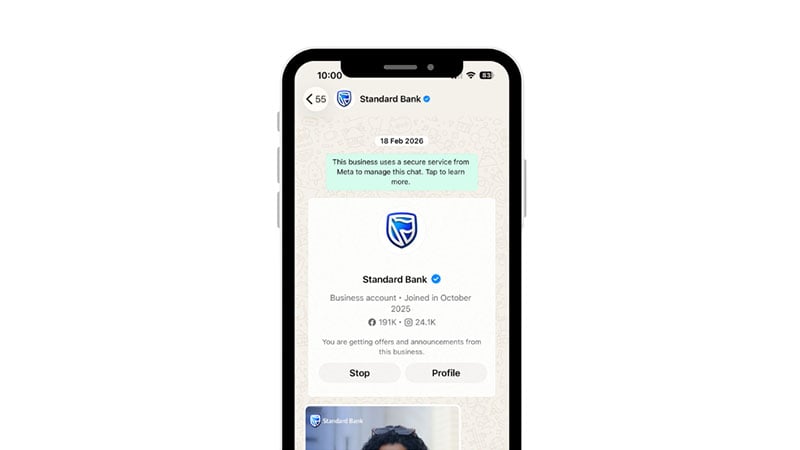
Here is how it looks like
Here’s how to stay safe
- Don't trust a profile picture as proof of identity
- Avoid clicking links in messages
- Contact us through official channels if you're unsure
4. What to do when you get an email
What it looks like
Fraudulent emails are designed to look authentic and often use Standard Bank branding, logos, and formatting.
They may claim that you need to:
- Restore account access
- Update your FICA information
- Confirm a payment
- Resolve a security issue
- Open an attachment to review an important document
Look out for:
- Sender addresses that are almost, but not quite, correct
- Generic greetings such as "Dear Customer"
- Poor spelling or grammar
- Unexpected attachments
- Links that don't match the website they claim to lead to
Tip: Hover over a link before clicking it to see where it really goes.
Terms and conditions apply.
Disclaimer: This article is for information purposes only and does not constitute financial, tax or investment advice. Readers are strongly encouraged to seek financial or legal advice before making any decisions based on the content.
Standard Bank, its subsidiaries or holding company, any subsidiary of the holding company and all of its subsidiaries, make no warranties or representations (implied or expressed) as to the accuracy, completeness, or suitability of the content of this article. The use of the article and any reliance on the content is at the reader’s risk.
Related articles and media