
Frequently asked questions about term loans
Term loans are loans that have a fixed instalment (monthly repayment), a fixed repayment term, and a fixed interest rate.
It’s an example of instalment credit, which involves borrowing a fixed amount of money and repaying it with interest in scheduled payments over a set period.
A term loan can be used for a variety of personal financial needs, such as major purchases, unexpected expenses or home improvements.
A loan consolidation is also a term loan, but it’s used to consolidate multiple loans into one, new loan. The funds from this loan is then paid to the different loan providers directly. Learn more about loan consolidation.
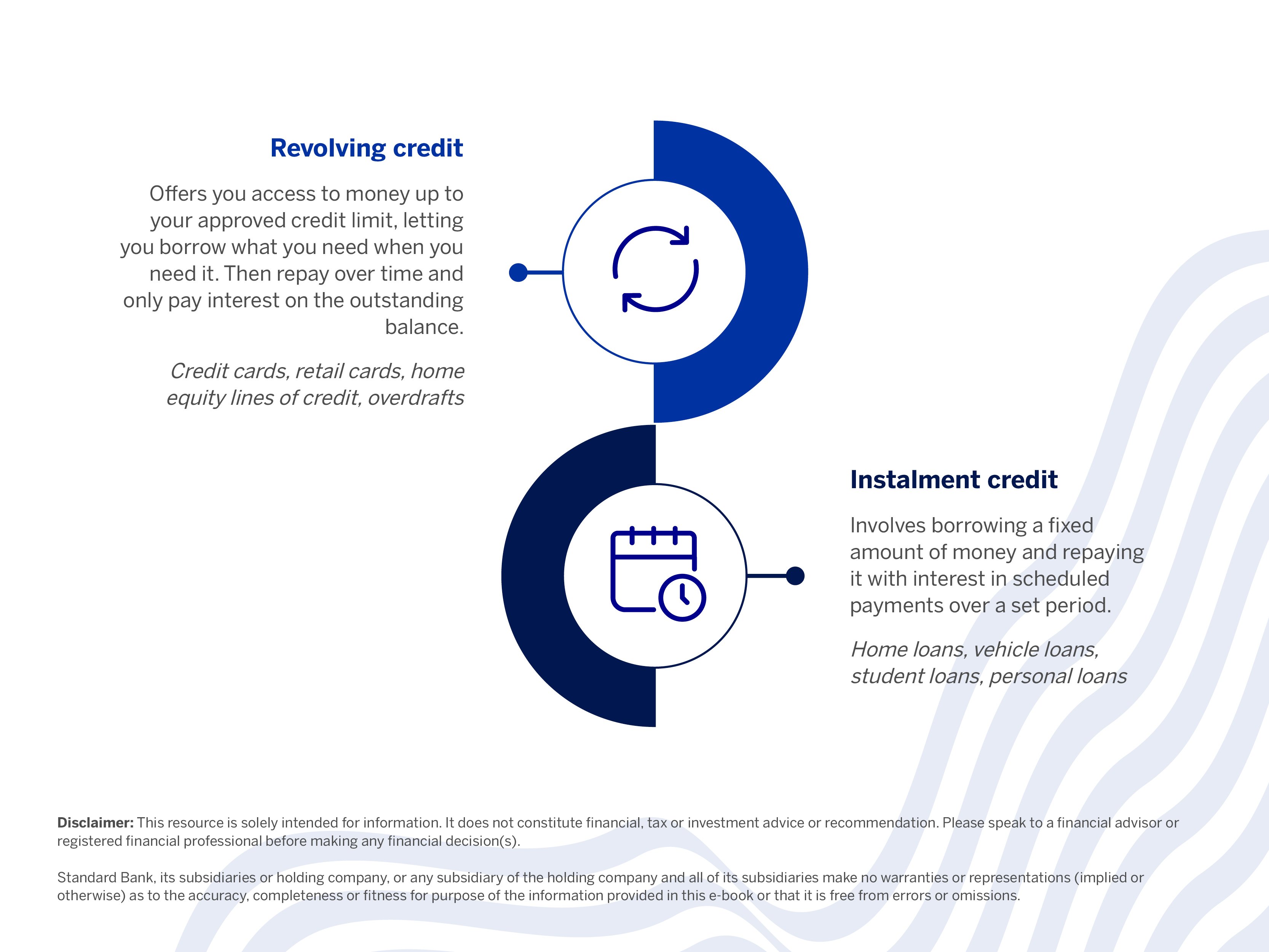
The difference between term loans, revolving loans, credit cards and overdrafts
Unlike a term loan, a revolving loan provides ongoing access to credit up to a set credit limit. Once you have repaid an amount on your loan, you can re-borrow that amount. The interest rate on a revolving loan is variable and the repayments are fixed, but the term of your loan adjusts based on usage.
A credit card has a separate account with a card and may offer an interest-free period. Learn more about credit cards and how they work.
An overdraft is linked directly to your bank account and, unlike a credit card, has no interest-free period. It’s a short-term credit option that gives you immediate access to funds up to the agreed limit on your account.
Frequently asked questions about term loans
How is interest calculated on a term loan?
Interest is calculated daily on the amount you still owe (the principal balance) on your loan. Your interest rate is fixed, which means that that it won’t change over the term of your loan.
Learn more about fixed and variable interest rates.
How much of my monthly term loan repayments go towards the principal amount and how much goes towards interest?
In most term loans, your monthly repayment is split between interest and principal, and that split changes over time.
How it works:
- Interest is the cost of borrowing the money
- Principal is the original amount you borrowed
Each month the instalment (repayment) stays the same, but what that payment goes towards changes over time.
Early in the loan
- A larger portion goes towards interest
- A smaller portion goes towards your principal
Later in the loan
- Less goes to interest
- More goes to the principal
This is because interest is calculated on the outstanding balance, which is higher at the start of your loan and reduces as you make payments.
As the outstanding balance (principal) reduces, there’s less interest to pay.
A portion of the repayment also goes towards the insurance and monthly service fee.
Do I need insurance?
Yes. Credit Life Insurance is included with your term loan. It’s designed to help cover your loan repayments in the event of death, disability or retrenchment, subject to the policy terms and conditions.
Learn more about credit life insurance and why it’s important.
If my loan is approved, how do I access my funds?
The funds will be paid into your transactional account and available for use once the loan has been finalised.
Can I choose between a fixed and variable interest rate?
No, the interest rate on a term loan is fixed.
What determines the minimum and maximum amount of money I can borrow?
The amount you qualify for is based on your income, what you can afford after all your other financial obligations are met, and your credit history.
Can I increase my loan limit after my loan has been approved and I start making payments?
No, you can’t increase the limit of a term loan. The loan amount you’re approved for is the limit of your loan.
Will a term loan have an impact on my credit score?
Yes, but using credit responsibly and making your monthly repayments on time can support your credit profile. Missing a payment or making late payments can have a negative impact on your credit score.
If you’re unable to make regular payments on your loans, visit our Debt Care Centre for help.
Does my credit score impact the chances of getting my term loan approved?
Your credit score is an important factor when applying for a loan, but it isn’t the only factor considered. All loan applications are subject to affordability and credit risk assessments, and approval is not guaranteed.
Learn how to build your credit score.
Can I choose the term of my loan?
Yes, you can choose a term of up to 84 months. The term of your loan is fixed and you can’t change it after the loan has been approved.
Can I extend the term of my loan?
No, a term loan has a fixed term ranging from 12 to 84 months.
Are there any fees associated with my loan?
Yes, there is a monthly service fee which is included in your monthly repayment. There is also a once-off initiation fee which can be paid separately or included in your total loan amount.
All fees will be clearly communicated in your loan agreement.
What is the shortest and longest repayment term I can get on my loan?
The shortest repayment term is 12 months (1 year), and the longest term is 84 months (7 years).
Repaying your term loan
If your loan is approved, the funds will be paid directly into your transactional account once the loan is finalised. A debit order will be created and the monthly repayment will be deducted from your account until your loan is fully repaid.
When you agree to the terms of your loan agreement, you can choose the day of the month you’d like the debit order to be deducted and the account the debit order will be deducted from.
Can I pay more than my monthly minimum payment on my term loan?
Yes, you can make manual payments over and above the debit order amount by transferring money or making a deposit into your loan account.
Can I pay my loan off early?
Yes, you can pay your loan off early.
Will I save on interest costs if I pay my loan off early?
Yes. The interest on your loan is calculated on the outstanding balance and charged monthly to the account, so paying off your loan early means that you’ll save on interest costs.
Are there any penalty fees for paying my loan off early?
No, there are no early termination fees if you choose to settle your loan sooner.
What happens if I miss a repayment?
Your loan will go into arrears, which may negatively impact your credit score. If you’ve missed any payments, or are about to, visit our Debt Care Centre for more information.
Can I choose when my monthly repayment is made?
Yes, you can choose your monthly debit order date. It will be on the same date every month, but may be processed earlier if the date falls on a weekend or public holiday.
How can I track what I still owe on my term loan?
You can view your account statement on the Banking App and Online Banking. You will also receive a quarterly statement via email.
Benefits of a term loan
- The interest rate on your loan is fixed, meaning that it won’t change over the term of your loan
- Because the monthly repayment amount remains fixed throughout the loan term, it can make budgeting easier
- You can choose the term of your loan (12 to 84 months), which means you can choose a term you are most comfortable with
- You can make additional payments into your loan account, allowing you to pay your loan off early
What you should consider before applying for a term loan
Consider what the loan is for and if it’s the right fit. For example, if you’re planning on consolidating your existing loans into one payment, a Loan Consolidation might be a better option.
Your credit score is one of several factors considered during the assessment process. All loan applications are subject to affordability, credit and risk assessments, and approval is not guaranteed. You can easily check your credit score on the Banking App and learn some useful tips on how you can improve your score.
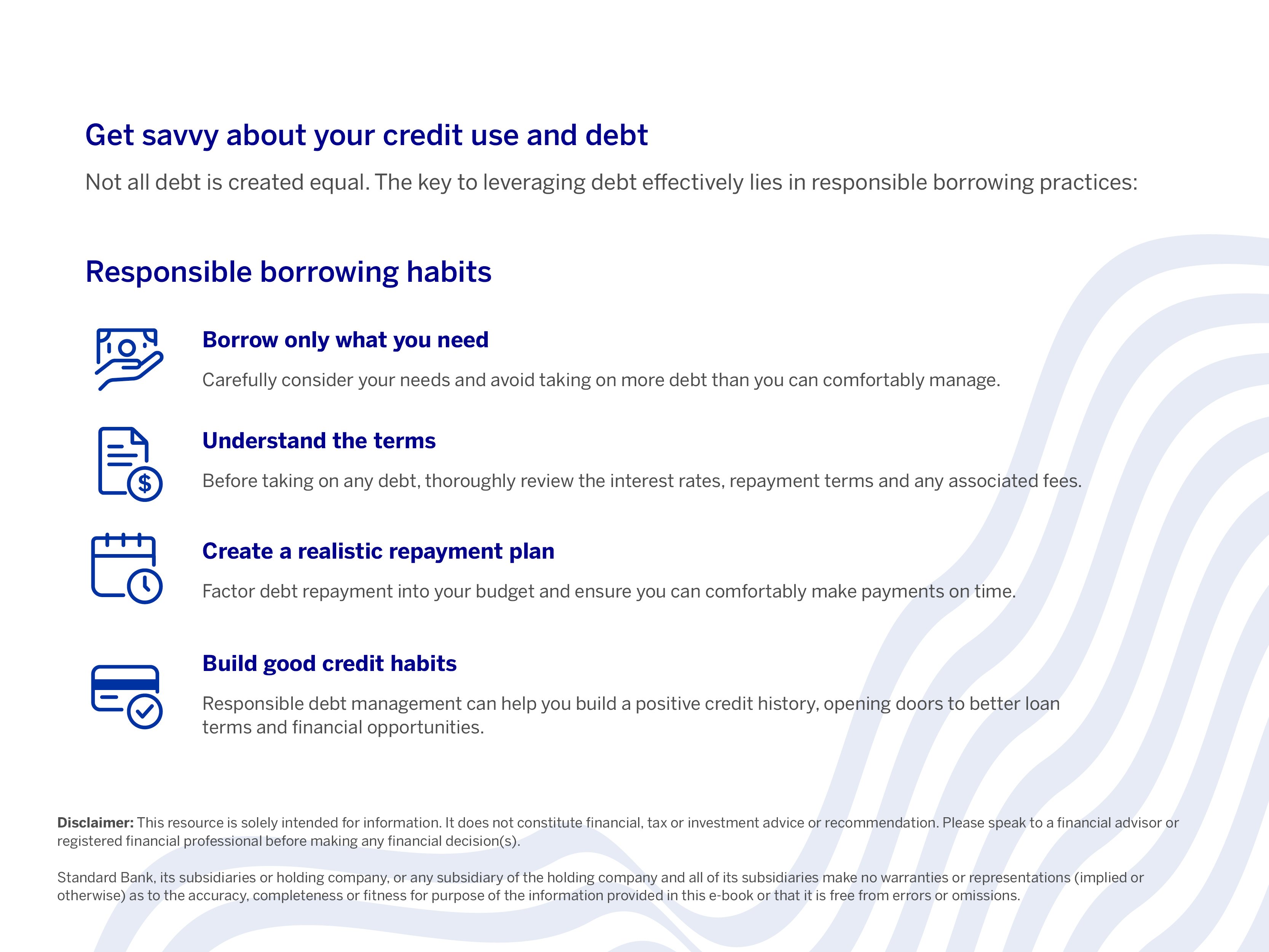
Before applying for a loan, it’s important to consider if the monthly payment fits into your budget and, should your income decrease, whether you’d still be able to make your monthly payment.
Review your existing monthly payments and assess whether an additional payment will stretch your monthly income too thin.
Also consider the term of your loan. While longer repayment terms can mean lower monthly payments, it also means you’ll pay more in interest over time.
Applying for a term loan
If you’re a Standard Bank customer, you can apply for a Term Loan on the Banking App, Online Banking or Cellphone Banking. You can also apply by visiting your nearest branch.
If you’re not a customer, you can start your application by clicking ‘Do I qualify’ or by visiting your nearest branch.
DO I QUALIFY
To apply for a loan, you must be at least 18 years old and have the following documents ready:
- Your South African ID
- Your latest 3 months’ bank statements if you don’t have a Standard Bank account
- Proof of residence (not older than 3 months)
- Your most recent payslip, employment contract or income documents
Manage your credit
Learn more about credit and how to manage your debt
Terms and conditions apply.
Disclaimer: This article is for information purposes only and does not constitute financial, tax or investment advice. Readers are strongly encouraged to seek financial or legal advice before making any decisions based on the content.
Standard Bank, its subsidiaries or holding company, any subsidiary of the holding company and all of its subsidiaries, make no warranties or representations (implied or expressed) as to the accuracy, completeness, or suitability of the content of this article. The use of the article and any reliance on the content is at the reader’s risk.
Disclaimer: This article is for information purposes only and does not constitute financial, tax or investment advice. Readers are strongly encouraged to seek financial or legal advice before making any decisions based on the content.
Standard Bank, its subsidiaries or holding company, any subsidiary of the holding company and all of its subsidiaries, make no warranties or representations (implied or expressed) as to the accuracy, completeness, or suitability of the content of this article. The use of the article and any reliance on the content is at the reader’s risk.
Related articles and media