
Build financial habits early with a (sum)1 Banking Account
Exposing children to money management early not only equips them with critical life skills that cultivate confidence but also empowers them to make smart, informed decisions as they grow into financially responsible adults.
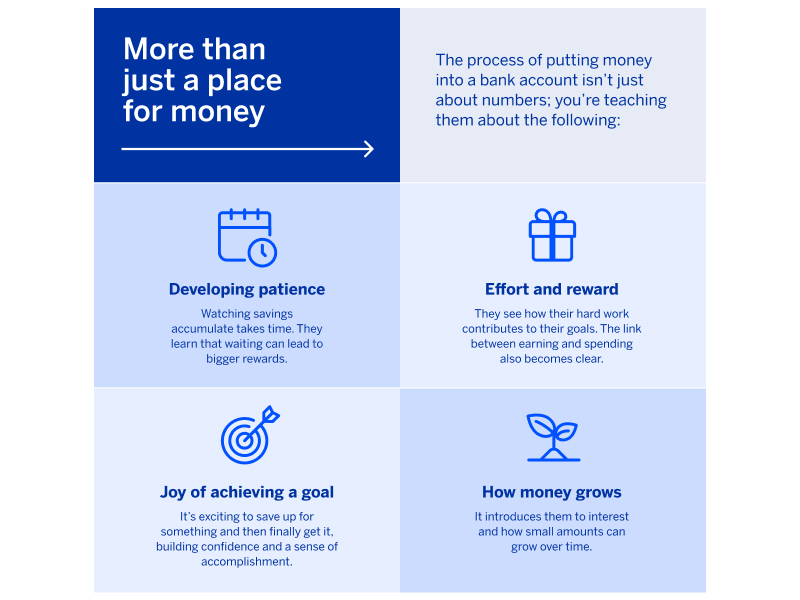
A first/starter bank account for a child is more than just a place to keep cash; it’s a powerful and hands-on educational tool. Having their own bank account, which they are responsible for, fosters a sense of ownership and responsibility in a child. In addition to learning about money, it also provides a space for decision-making and understanding the consequences of their actions.
What a bank account teaches a child
Fostering a child's sense of autonomy is foundational to their healthy development, and one of the most impactful ways to cultivate this independence is by gradually empowering them with control over their own money in their own bank account.
When a child decides how to allocate their allowance, birthday money or earnings, it encourages thoughtful consideration of spending and the practicalities of managing their money.
Choosing the right start: A (sum)1 Banking Account
A (sum)1 Banking Account is tailored for children under the age of 16, providing an affordable and easy-to-manage platform where children can learn practical banking skills and about savings and understand money, while parents can monitor and support their kids’ account(s) with the help of our Banking App.
Test your knowledge: What is the role of a (sum)1 Banking Account?
Correct! That is the right answer.
A (sum)1 Banking Account is a great tool to learn how money works, develop responsibility and work towards a financial goal.
Incorrect! Please try again.
Select another option to find the right answer.
Terms and conditions apply.
Disclaimer: This article is for information purposes only and does not constitute financial, tax or investment advice. Readers are strongly encouraged to seek financial or legal advice before making any decisions based on the content.
Standard Bank, its subsidiaries or holding company, any subsidiary of the holding company and all of its subsidiaries, make no warranties or representations (implied or expressed) as to the accuracy, completeness, or suitability of the content of this article. The use of the article and any reliance on the content is at the reader’s risk.
Related articles and media