4 Tips for practical ways to teach money lessons
Building a strong understanding of money early in life lays the groundwork for sound financial habits. The sooner children grasp these concepts, the better equipped they become for financial independence and success in the future. Cultivating basic financial skills is key to growing their financial literacy.
When introducing financial topics to children, clarity, practicality and relatability are paramount. It also helps if the learning experience is engaging. At its core, this involves guiding them to balance their needs and wants with available resources, fostering a positive and healthy relationship with money.
Here’s how to incorporate money lessons into daily life to help children become financially fluent.
Engage in open money conversations
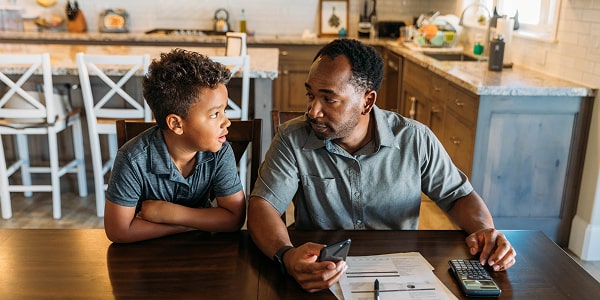
Regular, open discussions about money and its workings create ‘financial socialisation’, encouraging curiosity and helping children become comfortable and confident regarding money. This approach demystifies finances and creates opportunities for guidance where they can learn from both their own experiences and those of others in a low-risk environment.
Here’s how: Whether at home or during a shopping trip, initiate conversations about cost, value and what they perceive as fair pricing. Involve them in minor financial considerations, such as deciding whether to purchase an immediate small treat or save for a more significant item next week. Always tailor explanations to their age and comprehension level.
Introduce them to a bank account early
You can start with a savings jar or money box and progress to a formal bank account. A bank account offers key learning opportunities, providing a sense of ownership over their money and visually representing the abstract concept of financial growth and management.
When a child wants to buy something, allowing them to use funds from their account can illustrate how balances increase and decrease. This practical experience helps them understand financial consequences, shapes their ability to manage funds and teaches the time value of money and the effort required to accumulate more of it.
Here’s how: A (sum)1 Banking Account is a great way to introduce them to the world of banking and managing money, and you can monitor and support their progress conveniently from our Banking App.
Make it a game
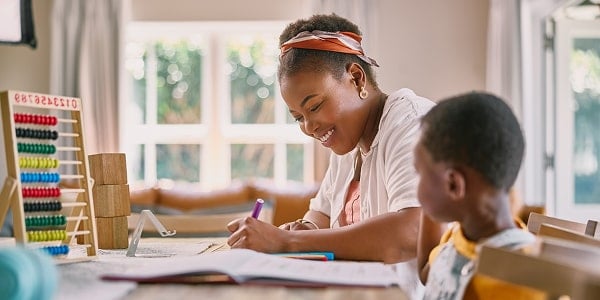
Kids learn through play, and when they play, they become immersed in the situation and environment and internalise those skills. You can let them help you find the best deals and give them a budget to buy things for the family.
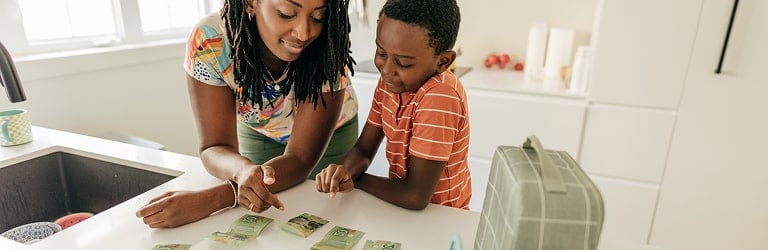
Here’s how: If there is a special family occasion, such as a birthday, give them a budget of R150 and instruct them to go to get some eats. This helps them participate and feel that they have a say but also teaches responsibility within a practical context.
Connect effort to earning
Instead of a fixed allowance, consider structuring it as a ‘payday’ linked to tasks, chores and responsibilities. This means children perform specific duties to earn a predetermined amount. This method can help them appreciate the value of money, understand rewards for effort and develop an understanding of the connection between work and financial gain.
Test your knowledge: What's the best way for kids to learn about money?
Correct! That is the right answer.
Kids learn best when money lessons are woven into their everyday activities and real-life experiences, making it practical, relatable and even fun.
Incorrect! Please try again.
Select another option to find the right answer.
Terms and conditions apply.
Disclaimer: This article is for information purposes only and does not constitute financial, tax or investment advice. Readers are strongly encouraged to seek financial or legal advice before making any decisions based on the content.
Standard Bank, its subsidiaries or holding company, any subsidiary of the holding company and all of its subsidiaries, make no warranties or representations (implied or expressed) as to the accuracy, completeness, or suitability of the content of this article. The use of the article and any reliance on the content is at the reader’s risk.
Related articles and media