
Shopping tips for Black Friday and Cyber Monday
Responsible Black Friday and Cyber Monday shopping starts before the first catalogue or online offer appears.
Black Friday, Cyber Monday and the month-long specials around them can be useful opportunities to buy planned essentials, long-awaited items and festive-season gifts at a better price. However, the number of promotions, and the pressure to act quickly, can also make it easy to overspend, take on unnecessary debt or fall victim to scams.
Know what you need, what you can afford, where you’re buying from and how your payment details will be protected.
Budget planning for major retail sales events
Black Friday and Cyber Monday might be separate shopping events, but the same principles apply to both. Whether you’re shopping in-store, online or taking advantage of month-long specials, a little preparation can help you enjoy genuine deals without overspending or taking unnecessary risks.
Start by deciding what you need and setting a firm budget before you start browsing. Creating a shopping list will help you prioritise your spending, stay focused on your needs and avoid impulse purchases when you see tempting deals.
Include the following:
- Essentials you need to buy
- Items you’ve been planning to purchase
- Gifts and nice-to-haves, if your budget allows
Then ask yourself, “If I didn’t need this at full price, do I really need it on sale?”
Remember that a discount isn’t a saving if you’re buying something you don’t need or can’t afford. Be careful of buying just because it seems like a good deal.
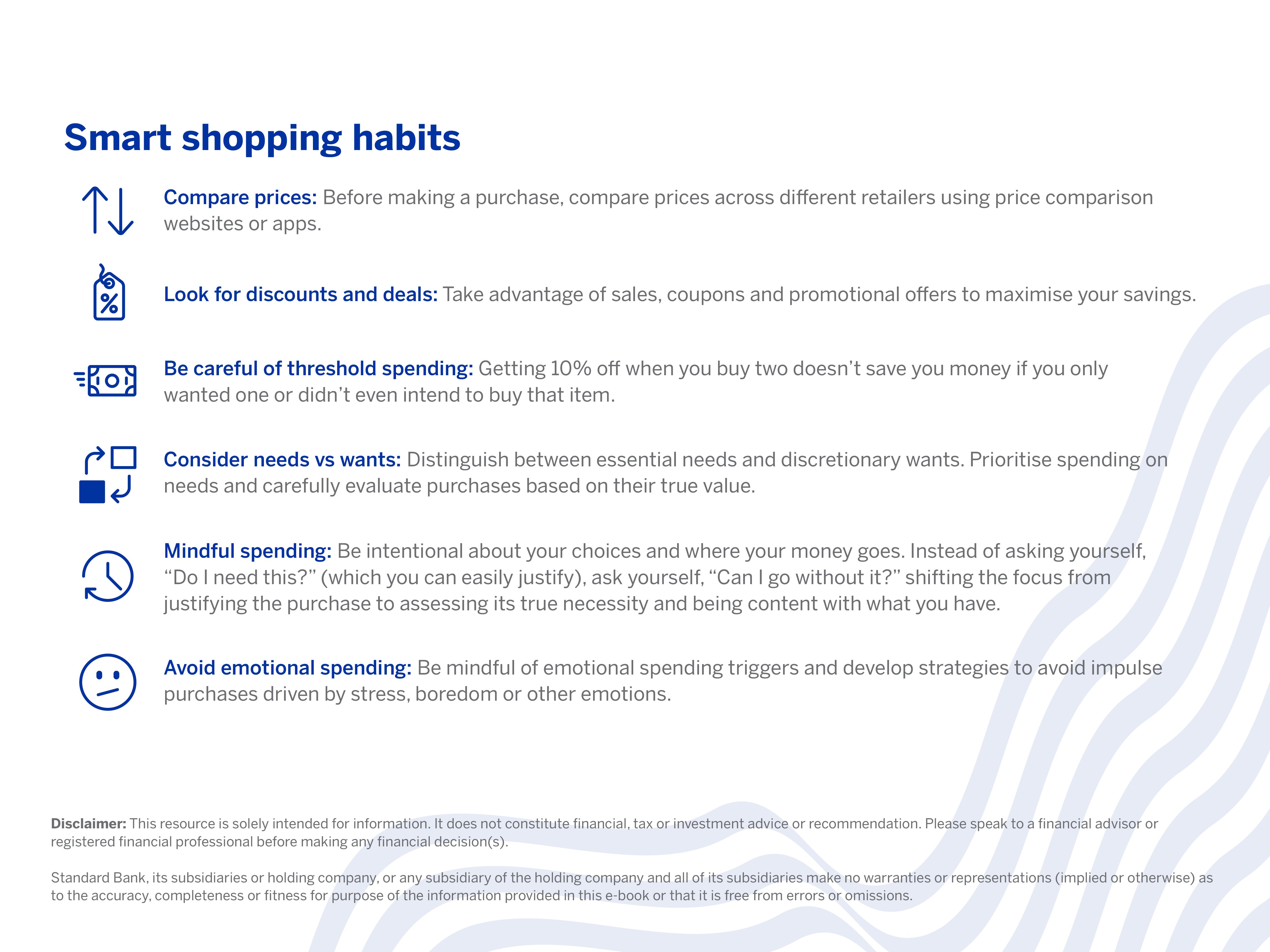
More smart shopping habits
- Compare prices before you buy
- Look for deals that actually save you money
- Don’t buy extra just to get a discount
- Separate needs from wants
- Pause before impulse purchases
Are Black Friday and Cyber Monday deals worth it?
Not always. They may offer value when a purchase is planned, affordable and priced competitively, but a lower price doesn’t make an unnecessary buy worthwhile. Before buying, compare the item’s usual price, availability and offers from different retailers.
Retailer catalogues and newsletters can help you monitor relevant prices, including pre–Black Friday specials. If an item you genuinely need is available earlier at a price and under conditions that meet your requirements, you can assess whether buying then makes sense. Otherwise, waiting or choosing not to buy may be the more appropriate option.
How do I know whether a deal is genuine?
Buy from reputable retailers and check customer reviews and ratings where available. If a discount looks too good to be true, it probably is. Take time to check the retailer and confirm whether the offer is real and realistic.
Learn how to protect yourself when shopping online.
Before buying appliances or other large items, also read the fine print. Check the return policy and warranty as some sale items may be final sale, eligible only for an exchange or subject to store credit conditions.
In-store and online shopping safety tips
Whether you’re shopping in-store or online, you can take steps to protect yourself, your payment details and your devices.
 |
 |
|
|
To avoid Black Friday and Cyber Monday scams, be cautious with unexpected emails, unfamiliar links and voucher attachments. Fraudsters may create websites and messages that appear to come from legitimate businesses while voucher attachments may contain embedded malware.
NEVER share your OTP or PIN with anyone. Genuine sellers never ask for it.
| DON’T | DO |
|
|
| If you suspect fraud on your Standard Bank account, call the Standard Bank Fraud Line on 0800 222 050 or report fraud on your Banking App. | |
What is the safest payment method for online shopping?
The safest approach is to shop with a reputable retailer through a secure payment gateway and use a payment option that adds protection without requiring you to share your account details unnecessarily.
For secure online payments without using your account details, use a Virtual Card for local and international purchases. Learn how to create a prepaid Virtual Card and shop online like a pro.
Use credit carefully
If you’re thinking of using credit for your purchases, consider the type of credit and its long-term cost. Build good credit habits by paying on time, keeping track of your repayments and borrowing only what you can afford to repay.
Use credit responsibly
Learn more about credit and how to use it responsibly
Remember, the best deal is one that meets a genuine need, fits your budget and can be bought securely.
Terms and conditions apply.Disclaimer: This article is for information purposes only and does not constitute financial, tax or investment advice. Readers are strongly encouraged to seek financial or legal advice before making any decisions based on the content.
Standard Bank, its subsidiaries or holding company, any subsidiary of the holding company and all of its subsidiaries make no warranties or representations (implied or expressed) as to the accuracy, completeness or suitability of the content of this article. The use of the article and any reliance on the content are at the reader’s risk.
Related articles and media